
Review · PUERTO VALLARTA
Sea Turtle Release – A Puerto Vallarta Conservation Adventure
Few Puerto Vallarta activities let you help a living creature begin its journey. At sunset, you carry a newborn sea turtle to the sand, set it down, and watch it paddle toward the Pacific. The release is simple, carefully managed, and surprisingly moving.
I like the hands-on conservation and the way the biologists explain the work behind each hatchling. I also like the setting: a beach at dusk, with mangroves, coastal birds, and sometimes crocodiles near the lagoon. The main drawback is the walk, which can total about a mile over sand and loose gravel, with the return often taking place in darkness.
In This Review
- Key points to know before you book
- Why the sunset release feels different
- Starting at the Ecotours Vallarta office
- The short van ride and the coastal walk
- At the sea turtle camp
- Releasing the hatchlings into the Pacific
- What the coast may show you after dark
- Who will get the most from this outing
- Timing, group size, and overall value
- How to prepare for the evening
- Should you book the Sea Turtle Release?
- FAQ
- Where does the sea turtle release tour begin and end?
- How long does the activity take?
- Is transportation included?
- How much walking is required?
- What happens if there are no baby turtles on the scheduled date?
- Is mosquito repellent provided?
Key points to know before you book
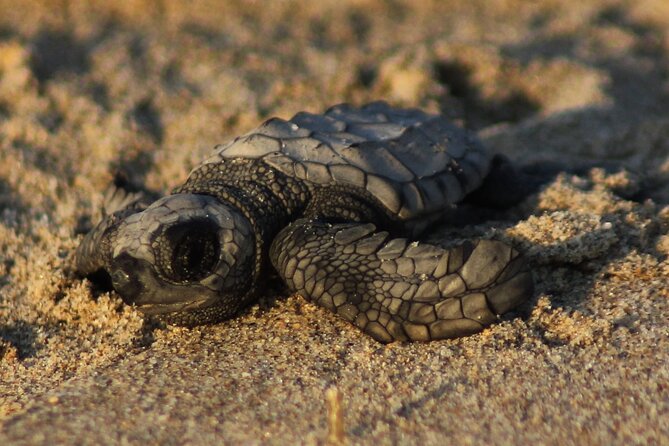
- The turtle release happens at sunset: You help hatchlings reach the ocean when evening conditions offer better protection from predators.
- The outing begins with real conservation information: A bilingual biologist covers turtle biology, nesting, hatchling care, and human effects on the coast.
- Expect a beach walk, not a roadside viewing stop: The walk can last 15 to 20 minutes each way and may include sand, rocks, and loose gravel.
- The experience is family-friendly but not effortless: Children can take part, though parents assist anyone under seven with carrying a coconut to the sand.
- The group is limited to 24 people: That keeps the release more orderly, though the final turtle launch can feel rushed if the group reaches the beach late.
- Plan for insects and changing weather: Bring mosquito repellent, and remember that poor weather can cancel the outing.
Why the sunset release feels different
The central appeal is not simply seeing baby turtles. You take part in a carefully timed conservation effort, then watch the hatchlings make their own way to the sea. That small act gives the evening a purpose beyond sightseeing.
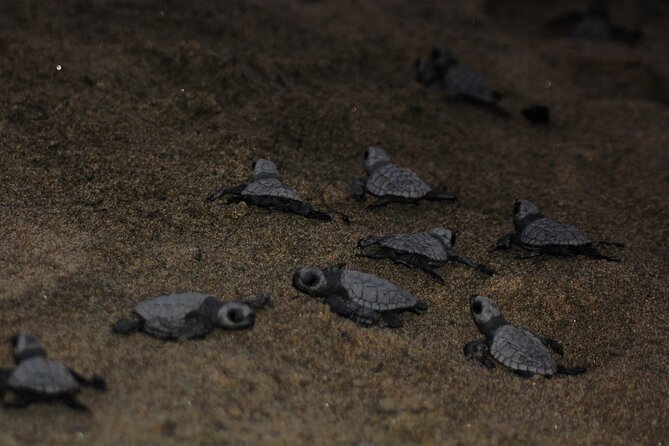
The turtles are released at dusk, when the lower light helps reduce exposure to predators. You may be able to name your turtle before setting it down, a detail that makes the moment especially memorable for children. The little animals then move across the sand under their own power, often appearing to race one another toward the water.
This is not a petting experience. You are not meant to handle the hatchlings casually or keep them in your hands for long. The biologist directs the process, so the turtles remain the focus rather than becoming props for photographs.
The setting adds a great deal. The beach looks different as the sun drops, and the walk gives you a close look at the coast rather than only the resort side of Puerto Vallarta. Some departures have also included sightings of birds, crocodiles in a nearby reservoir, and, on one unusually lucky evening, a female turtle coming ashore to nest.
That nesting sighting cannot be promised, of course. The same is true of crocodiles and other wildlife. The guaranteed core is the educational talk, the visit to the turtle camp, and the release, provided hatchlings are available.
More sea turtle release evenings:
- Release of Sea Turtles in Camp Tortuguero
★ 5.0 · 124 reviews - Puerto Vallarta: Baby Turtle Release in Conservation Area
★ 4.8 · 110 reviews - Puerto Vallarta: Sea turtle release at Sunset
★ 5.0 · 15 reviews
Starting at the Ecotours Vallarta office
You check in at 4:50 PM at Ecotours Vallarta, located at Dive ShopProa 20 in Marina Vallarta. The activity ends at the same office, so you do not need to arrange a separate pickup at the beach.
At 5 PM, you meet the bilingual guide and the rest of the group. Guides named Michael, Maggie, and Francis have led departures, and the best part of this opening session is the chance to ask questions before the evening becomes more active.
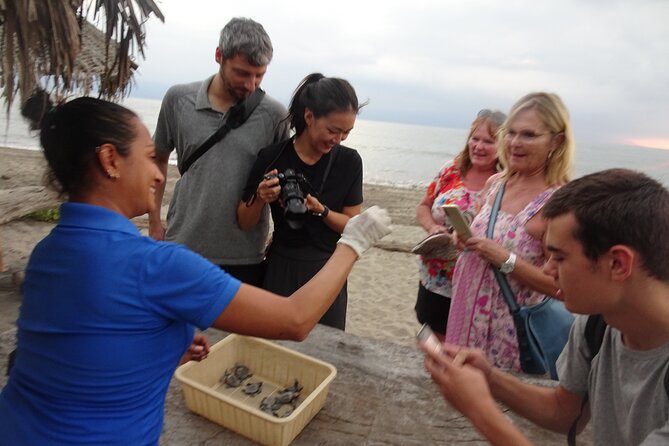
The talk covers sea turtle biology and conservation. You learn about the turtle life cycle, nesting, the threats faced by hatchlings, and the work involved in protecting nests and caring for young turtles. A slide presentation may be part of the introduction.
The information is suited to families, but adults will find useful context too. One presentation includes photographs of turtle mating. They are educational rather than graphic, but parents with very young children may want to know this in advance.
There is restroom access before departure, as well as on the return to the office. Bottled water and light snacks are included, such as a granola bar, juice, or soda. That is useful because the activity reaches the beach around dinner time, but these are modest refreshments, not a full meal.
The short van ride and the coastal walk
At about 5:45 PM, you leave by air-conditioned vehicle. The drive to the beach takes roughly 15 minutes, though road conditions can make the ride bumpy at times. The vehicle is part of the price, and the return trip brings you back to Marina Vallarta.
The more important part of the transfer comes after you leave the van. You walk along the beach for about 10 minutes according to the scheduled plan, though you should allow 15 to 20 minutes based on the pace and conditions described by participants. The full outing requires roughly a mile of walking over sand and loose gravel.
Your guide points out the coastal environment and nearby mangroves along the way. This gives the conservation talk a physical setting. You are not just hearing that the coast matters, you are seeing the sort of shoreline that sea turtles depend on.
The walk is gentle for an active adult, but sand changes the equation. It takes more effort than a mile on a paved sidewalk, and uneven areas can make the return trip harder. After sunset, visibility is lower. If you have trouble walking on sand, loose gravel, or rocky sections, this is not the right excursion for you.
The activity is also not recommended during the advanced stages of pregnancy because of the amount of walking. Anyone with mobility concerns should read the walking requirement carefully before booking rather than assuming the van takes you directly to the camp.
At the sea turtle camp
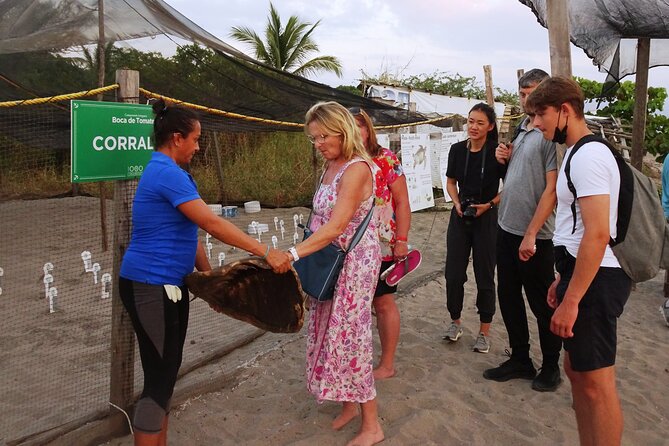
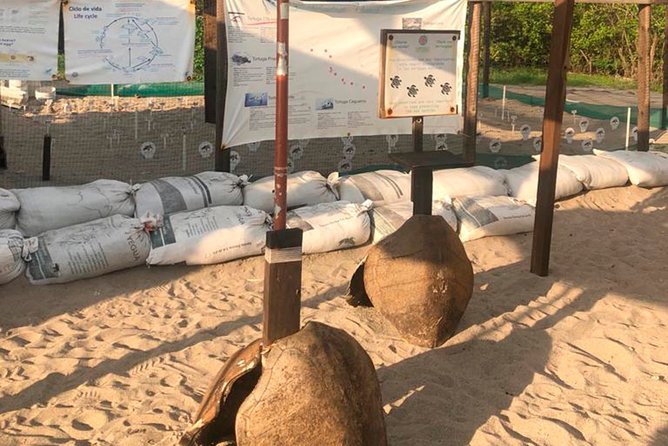
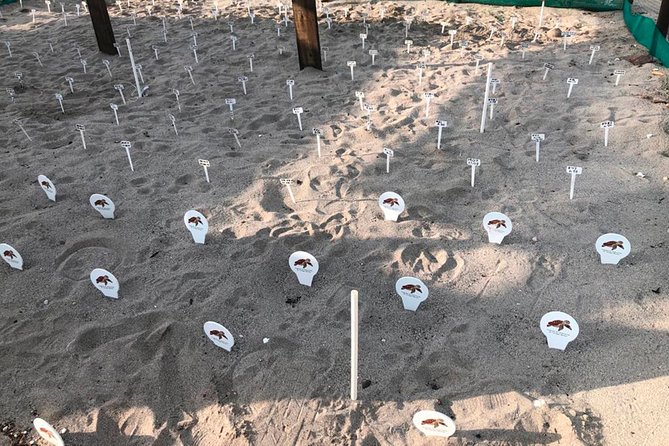
At the camp, you are introduced to the local protection work. The program includes nest monitoring and hatchling care, which helps explain what happens before the turtles reach the release point.
This is where the tour earns its conservation value. A turtle release can seem like a single charming event, but the camp shows that the release depends on steady work before and after that moment. Protecting nests, monitoring hatchlings, and choosing the right release time all require attention.
The biologist guides the group through the process and answers questions. Guides Michael, Maggie, and Francis have been singled out for their friendly manner and strong command of the subject, but the exact guide depends on the date.
The group can include families, couples, solo participants, older adults, and children. The maximum is 24 people. That is a manageable size for a short talk and organized release, though a full group means you should stay close to the guide and follow instructions carefully.
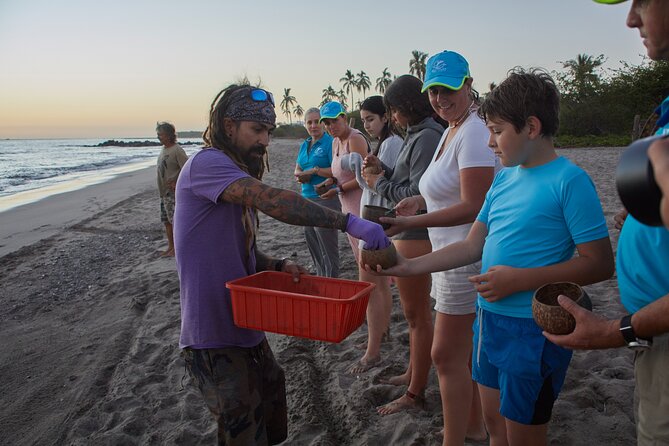
Parents should note one specific rule. Children under seven are assisted by their parents in carrying a coconut to the sand, where they release the hatchlings. The coconut provides a simple way to transport the turtle without direct handling, and it gives small children a clear role in the process.
A different kind of day out in Puerto Vallarta:
- Puerto Vallarta Best Zipline Canopy + Tequila and Speed Boat Ride
★ 5.0 · 3,786 reviews - Winner 2025 Downtown Vallarta Food Tour with Vallarta Food Tours
★ 5.0 · 3,738 reviews - Extreme Adventure, Wildest Bridge, ATV & Ziplines
★ 5.0 · 3,179 reviews - Mega Yacht ALL INCLUSIVE Yelapa Waterfall & Snorkeling Adventure
★ 5.0 · 2,515 reviews
Releasing the hatchlings into the Pacific
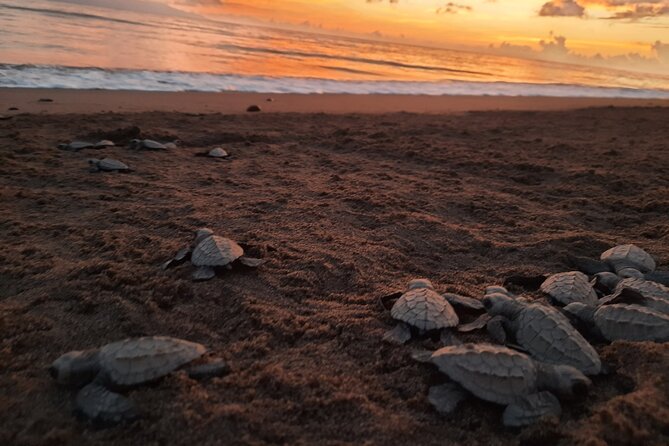
The release is timed for sunset. You may be given a hatchling to name, then place it on the sand at the instructed starting point. From there, the turtle makes its way toward the water.
The sight is small-scale but powerful. You see the hatchlings push forward with their flippers, pause, correct their direction, and continue toward the breaking waves. Their size makes the task look enormous, which is part of the emotional effect.
Some children become deeply attached to their turtle in the few minutes before release. That can be sweet, though you may need to explain that the turtle is wild and must continue without us. The point is not to rescue it from the ocean, but to give it a safer start.
The release can feel rushed if the group arrives late or if the light is fading quickly. You should not expect a long private session with one turtle. This is a shared conservation activity, and the biologist needs to keep the entire group moving and protect the hatchlings from unnecessary handling.
Photography is likely to be tempting, but the best approach is to take a few pictures before or after the release and keep your attention on the turtles as they move. Flash, crowding, and repeated handling would work against the purpose of the activity.
What the coast may show you after dark
The return walk is part of the experience, not just a way back to the vehicle. You may see the beach and nearby water in a different mood after sunset, and guides may point out birds or wildlife along the route.
Crocodiles have been seen in a nearby reservoir, with one outing spotting about eight. This is an occasional bonus, not a promised part of the tour. You should not expect to see a crocodile, and you should follow the guide’s directions around any waterway.
The walk back is also where the practical drawbacks matter most. Sand is harder to cross in low light, and some parts may feel uneven. Wear shoes that you can walk in comfortably and avoid treating this as a flip-flop-only beach stroll.
Mosquito repellent is not included, and it is described as essential for comfort and protection. Apply it before leaving the office and bring more if you need it. The coastal and mangrove setting makes insects a realistic concern.
Who will get the most from this outing
I would choose this for families who want an activity with meaning, not just another boat ride or beach stop. Children old enough to listen to instructions can learn about wildlife and take part in a clear, memorable action.
It also works well for couples and solo visitors. The sunset, quiet beach, and short time watching the turtles make this an unusually reflective Puerto Vallarta activity. You do not need to be a serious wildlife enthusiast to enjoy it, though a basic interest in animals and conservation will make the talk more rewarding.
Teenagers may appreciate the rare combination of education and something genuinely hands-on. The release is brief, but it is far more distinctive than a standard attraction where you only look at animals from behind a barrier.
I would be cautious if you have limited mobility, balance problems, or difficulty walking on soft sand. The tour description says most people can participate, but that does not mean the beach route is accessible for everyone. A participant with a disability found the actual release wonderful but the route much harder than expected, especially on hills and sand.
Children under seven can join with parental help. Parents should be ready for the walk, the dark return, and the possibility that a young child may become emotional about leaving the turtle behind.
Timing, group size, and overall value
The scheduled outing runs about two hours, from the late afternoon check-in to the return at roughly 7:15 PM. In practice, the evening depends on the drive, walking pace, sunset, and the number of people taking part.
The included air-conditioned transport matters because the beach site is not at the marina. Bottled water and snacks are small additions, but they make the transition from afternoon touring to evening easier. The bilingual biologist is the main value: you receive context, answers, and direction during a conservation activity that would be difficult to arrange on your own.
No tour price is provided here, so I cannot judge the exact cost against other Puerto Vallarta excursions. I can say what you are paying for: transportation, a guide with conservation expertise, access to a working turtle camp, educational material, and a supervised release at the proper time.
The strongest value is the authenticity. This is not a staged animal show. The event depends on hatchlings being available, and the turtles are released because they are ready to begin life at sea, not because a schedule demands it.
That also creates uncertainty. If there are no baby turtles on your date, the operator will contact you to reschedule. Weather can cancel the activity too. That is inconvenient, but it reflects the fact that this is an outdoor conservation program rather than a fixed indoor attraction.
The booking terms allow free cancellation up to 24 hours before the start time for a full refund. Cancellations or changes within 24 hours are not refunded or accepted. If poor weather or an insufficient minimum group causes cancellation, you are offered another date, another experience, or a full refund.
How to prepare for the evening
Bring mosquito repellent, comfortable walking shoes, and clothes suitable for a warm beach evening. You should also be prepared for sand, loose gravel, rocks, and a walk back after dark.
Eat a proper meal earlier if you tend to get hungry. The included granola bar, juice, and soda are useful snacks, but they will not replace dinner.
Keep your schedule flexible around the two-hour estimate. The activity is near public transportation, but the official meeting point is the Ecotours Vallarta office in Marina Vallarta. You need to arrive for the 4:50 PM check-in rather than heading directly to the beach.
Finally, let the guide manage the turtles. The best souvenir is seeing the hatchlings reach the ocean, not holding one for an extra photograph.
Should you book the Sea Turtle Release?
Yes, if you want a family-friendly Puerto Vallarta activity that combines a beautiful sunset with practical conservation work. The release is the kind of short moment you may remember longer than a much more expensive sightseeing stop.
Book with care if walking on sand is difficult for you. The beach route, uneven ground, insects, and dark return are real parts of the outing, not minor footnotes.
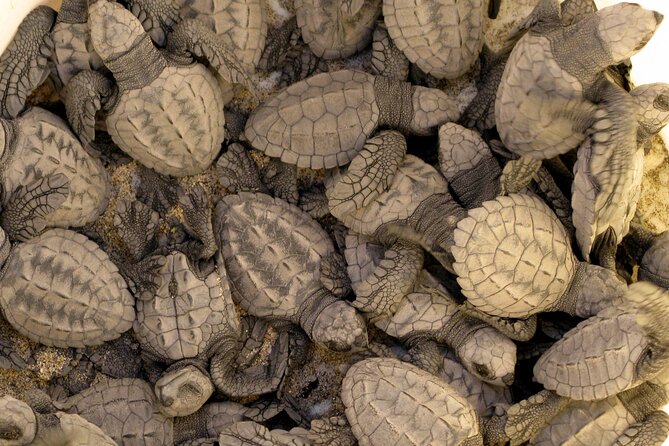
For most active visitors, the balance is excellent: a short drive, a useful biology talk, a working turtle camp, and a chance to help newborn Olive Ridley sea turtles reach the Pacific. Just bring repellent, wear proper shoes, and give yourself enough time to arrive at the marina office.
FAQ
Where does the sea turtle release tour begin and end?
It begins and ends at Ecotours Vallarta, Dive ShopProa 20, Marina Vallarta, 48335 Puerto Vallarta, Jalisco, Mexico.
How long does the activity take?
The experience lasts approximately two hours. Check-in is at 4:50 PM, and the scheduled return to the Ecotours Vallarta office is around 7:15 PM.
Is transportation included?
Yes. An air-conditioned vehicle takes you from the marina office to the beach area and back.
How much walking is required?
All participants must be able to walk about one mile in total over sand and loose gravel. The beach walk may take about 10 minutes each way in the planned schedule, though the pace can make it closer to 15 or 20 minutes each way.
What happens if there are no baby turtles on the scheduled date?
If no baby turtles are available, the sales staff will contact you to reschedule your reservation.
Is mosquito repellent provided?
No. Mosquito repellent is not included, and you should bring it for comfort and protection during the outing.
Just added around Puerto Vallarta
- Marietas Islands with Guaranteed Entry to Playa Escondida★ 3.5 · 3 reviews
- Puerto Vallarta Airport (PVR) to Sayulita hotels – Private Roundtrip Transfer★ 5.0 · 3 reviews
- Puerto Vallarta Airport (PVR) to Punta de Mita hotels – Private Arrival Transfer★ 4.5 · 3 reviews
- PRIVATE transportation from PVR Airport to South Coast★ 5.0 · 3 reviews
- Puerto Vallarta: Great Swedish Massage Experience★ 5.0 · 3 reviews
- Horseback Riding Experience in Puerto Vallarta★ 5.0 · 3 reviews
- From Puerto Vallarta & Nuevo Vallarta: Canopy Zipline Tour★ 5.0 · 3 reviews
- Mismaloya: Stand-Up Paddleboard & Snorkeling to Los Arcos★ 5.0 · 3 reviews