
Review · WHALE WATCHING
Whale and Dolphin Watching with a Biologist in Puerto Vallarta
The main draw here is not simply spotting a whale. You go out with a marine biologist who explains what the animals are doing, then helps you take part in research that supports whale and dolphin protection. In winter, Puerto Vallarta Bay becomes a busy nursery and mating ground for humpback whales, so the action can be remarkable.
I like two things right away: the small boat puts you close to the water without the feel of a giant sightseeing vessel, and the hydrophone lets you hear whale songs below the surface. I also like the opening lesson, where you may handle baleen and see whale vertebrae before heading out.
The tradeoff is that this is a real wildlife outing, not a theater show. Some departures spend an hour searching before the first sighting, and the boat has no bathroom. The operator advertises a 100 percent sighting guarantee or your money back, but conditions, animal behavior, and the timing of sightings can still shape your day.
In This Review
- Key points to know before booking
- Why Puerto Vallarta is a strong whale-watching base
- Starting at Opequimar Marina
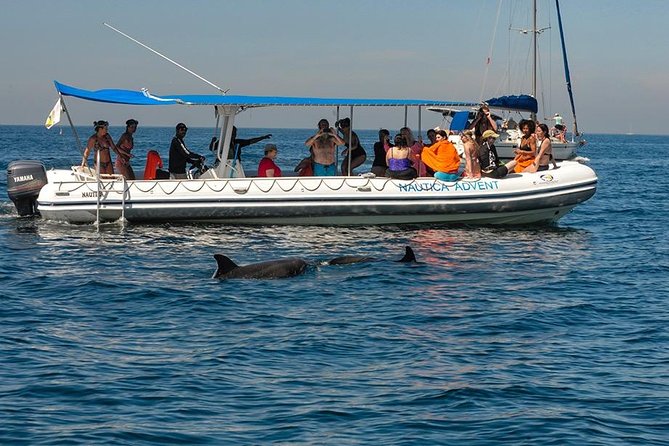
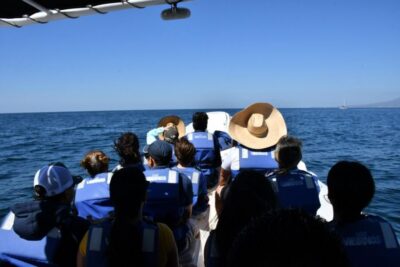
- A small boat that keeps the animals in view
- The first sightings may come quickly, or not
- Humpbacks, mothers, calves, and whale songs
- Dolphins and the rest of the marine cast
- What the research element adds
- The guides and captains make the difference
- Food, comfort, and what to bring
- Is the $105 price good value?
- Who should book this experience?
- Should you book the whale and dolphin tour?
- FAQ
- Where does the whale-watching tour start?
- Where does the tour end?
- How long does the experience last?
- How much does the tour cost?
- What animals might I see?
- Is the tour available in English?
- How many people can join the boat?
- Is there a bathroom on the boat?
- Can I cancel for a full refund?
- What happens if weather cancels the tour?
Key points to know before booking
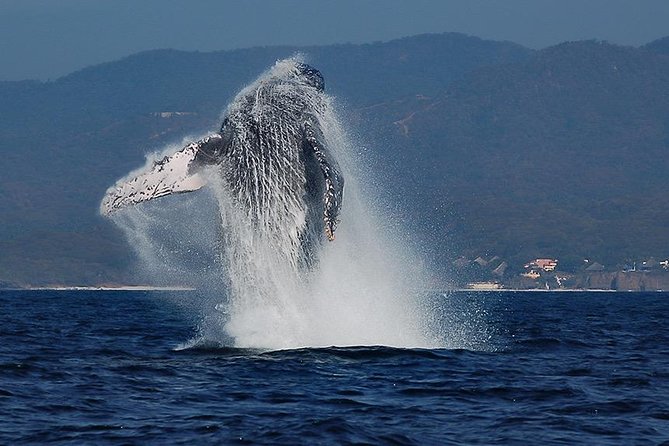
- Winter humpback action: Mothers, calves, males, and groups competing for females may all appear in the bay.
- Biologist-led interpretation: Guides such as Jemma, Gemma, and Camilla explain communication, parenting, migration, and behavior in plain language.
- Hydrophone listening: You may hear whale songs underwater, including sounds from animals close by and farther away.
- Small covered boat: Groups are capped at 20, with many departures carrying about 12 to 16 people.
- More than whales: Dolphins, turtles, giant mantas, sea lions, and even blue-footed boobies may enter the picture.
- Citizen science: Your participation helps support the company’s whale and dolphin research programs.
Why Puerto Vallarta is a strong whale-watching base
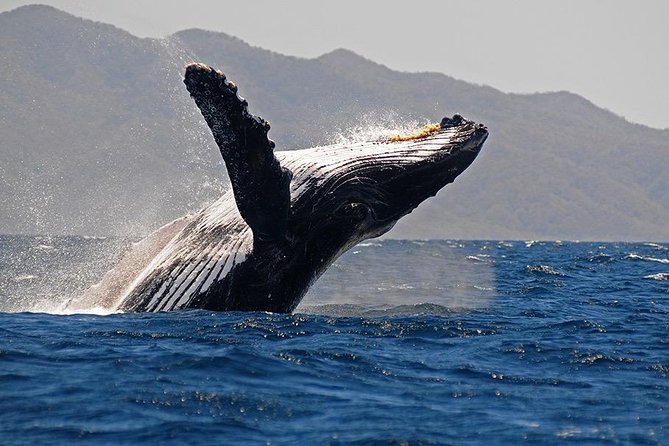
From roughly winter into the later part of the season, humpback whales come to the Puerto Vallarta area to mate and give birth. That gives you a chance to see more than isolated adult whales passing through. A mother and calf may travel together, a young whale may practice breaching, or several males may compete around a female.
The bay can produce very different scenes in a single four-hour outing. You might see one whale surfacing quietly, then later watch a calf slap its tail or launch out of the water. One especially useful part of having a biologist aboard is learning that these actions are not random decoration. Tail slaps, breaches, rolls, and repeated movements can relate to communication, play, or social behavior.
The boat may also reach areas near the Marietas Islands, depending on the outing and animal locations. The exact route is not fixed, which is sensible. Whales do not follow a sightseeing timetable, so a captain who adjusts the route has a better chance of putting you in the right part of the bay.
More whale watching from Puerto Vallarta:
- Sunsets and Whales Mega Yachts ALL INCLUSIVE: Puerto Vallarta
★ 5.0 · 509 reviews - Whale Encounter Puerto Vallarta
★ 5.0 · 469 reviews - Whale Watching Cruise In Puerto Vallarta & Nuevo Vallarta
★ 5.0 · 398 reviews
Starting at Opequimar Marina
You meet at Opequimar Centro Marino, at Av. Paseo de la Marina Sur 214 in Marina Vallarta. The tour ends at the same point, which makes the outing easy to fit into a Puerto Vallarta day without arranging a second pickup location.
Before boarding, expect an educational introduction rather than a quick safety speech and immediate departure. The guide may show a short video, explain the local whale population, and use physical examples such as baleen and a whale vertebra to give you a sense of the animals’ size.
That briefing matters. A humpback can look like a moving hump and a splash from a distance, but the basic context helps you read what you see. You learn what species may be present, how mothers and calves communicate, and why responsible boat positioning is important.
Crew members help people board and fit life jackets. The boat is covered, a useful feature under strong sun and on windy days. Still, this is a small boat on open water, not a padded harbor cruiser. Wear practical clothing and expect movement.
A small boat that keeps the animals in view
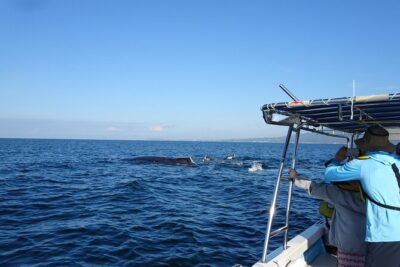
The maximum group size is 20, though several outings described groups of about 12, 16, or fewer. That size gives you a much better chance of seeing both sides of the boat than a large vessel would. When a whale surfaces, you are less likely to have a wall of people blocking the view.
A small craft also lets the captain respond quickly. Captains such as Jorge and Cesar are praised for positioning the boat behind whales so you can get a clear view of the fluke, while keeping a respectful distance. That balance is important: close enough for a good look, but not so close that the animal’s space is ignored.
The covered design protects you from the strongest sun, though it can limit how freely you move around. On a very small group, you may have more room to change seats. On a fuller departure, you need to share the best viewing spots.
One practical point deserves attention: there is no bathroom on the boat. Use the facilities before leaving the marina, and plan accordingly for four hours on the water. Service animals are allowed, and the experience is near public transportation. Most people can participate, but it is not recommended for anyone more than seven months pregnant.
The first sightings may come quickly, or not
Some outings reach whales within 15 to 20 minutes. Others can begin slowly, with about an hour passing before the first animal appears. Both patterns are normal for a wildlife trip, even if the second one tests your patience.
The benefit of the biologist is clear during the waiting periods. Instead of staring at an empty patch of sea, you can ask about whale behavior, local species, or the research work being done. The guide’s job is not only to point at a whale after it appears, but to help you understand the setting and prepare you to notice small signs.
Once whales are located, the boat may remain in an area for a substantial stretch of time. One outing spent about an hour around several active adult whales, with a sandwich and soft drink served while the group watched. Later, the crew moved toward an area where mothers and calves were present.
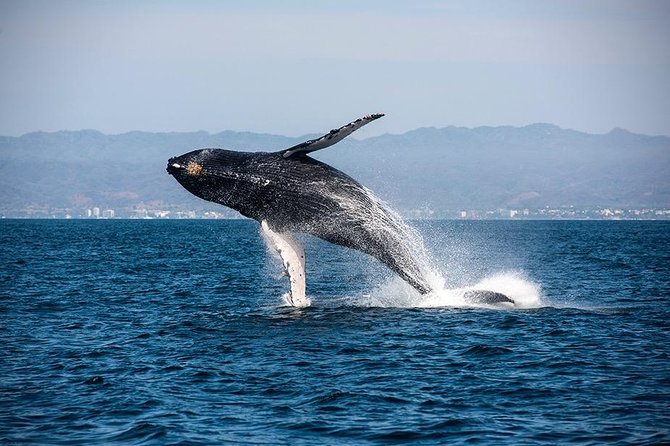
That approach is better than racing from one sighting to another. Staying put gives you time to see a pattern: a whale surfaces, breathes, disappears, and may return in a different place. You may also catch a fluke shot, a pectoral fin wave, a roll, or a breach if luck and timing line up.
A few more Puerto Vallarta trips worth weighing up
- Watch and Swim with Dolphins in the Wild
★ 4.5 · 668 reviews - Whale & Dolphin Watching Cruise in Puerto Vallarta All Inclusive
★ 4.0 · 212 reviews - Wild Dolphin Encounter & Snorkeling Adventure
★ 5.0 · 147 reviews - Wild Dolphin Encounter in Puerto Vallarta
★ 5.0 · 20 reviews
Humpbacks, mothers, calves, and whale songs
The humpbacks are the stars, and the possible scenes are unusually varied. You may see lone adults, male groups, a mother with a calf, or an escort male traveling with them. Several outings included calves breaching, playing, or receiving what appeared to be a lesson in communication from their mothers.
Do not expect every whale to perform. A calm surface and a visible blow can be rewarding in its own right, especially when the guide explains which individual you are watching and why it may be behaving that way. The most dramatic moments, such as repeated breaches or eight whales appearing together, are bonuses rather than promises.
The hydrophone is one of the tour’s best details. It brings the underwater world into the boat, allowing you to hear whale songs that would otherwise remain invisible. You might hear different songs from males, sounds close to the boat, or calls echoing from a greater distance.
This turns whale watching into more than a photo hunt. You use your ears as well as your eyes, and the experience becomes less dependent on a breach. A child or teenager who loses interest during quiet stretches may reconnect when the guide shares the underwater recording.
Dolphins and the rest of the marine cast
The tour combines whale watching with dolphin watching during winter. Possible dolphin species include bottlenose, spotted, spinner, and rough-toothed dolphins. The guide may explain that some groups remain in particular territories, adding useful context to what can otherwise look like a fast-moving blur beside the boat.
Dolphins may appear alone, in small groups, or in a large pod. One outing included a massive pod, while others saw dolphins near whales. A calf was even seen playing with dolphins while its mother watched nearby, a memorable example of how much can happen when you stay in one area.
Other sightings can include marine turtles and giant manta rays. Some outings also encountered a sea lion and blue-footed boobies. These animals are not guaranteed, but they add variety and make the trip worthwhile even during a quiet whale period.
Keep your camera ready, but do not spend the entire trip looking through it. A breaching whale can appear and vanish in seconds, and trying to frame every moment may cause you to miss the actual experience. Watch first, then photograph when the animal’s pattern gives you a chance.
What the research element adds
Wildlife Connection connects the tour to research programs involving whales and dolphins. Your participation helps make that work possible, and the biologist shares information about the animals and the project while you are on the water.
The citizen science element gives the outing a clear purpose beyond entertainment. You are not just being taken to a scenic location in hopes of a splash. You are learning how observations can contribute to a larger understanding of local cetaceans.
The exact tasks are not described in detail, so you should not book expecting a formal laboratory session or a long list of scientific duties. Think of it as guided participation and field education, with the tour’s sightings providing the setting.
I find that distinction useful. If you want a strict research expedition, this may feel too recreational. If you want to support conservation while having a well-explained wildlife encounter, the combination works well.
The guides and captains make the difference
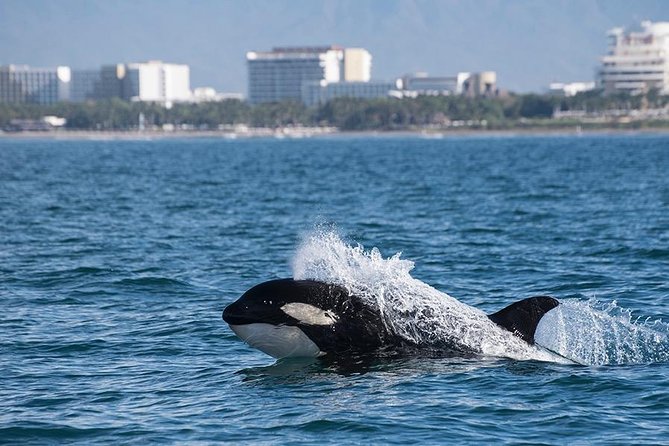
The guides are presented as specialists in cetaceans, with backgrounds that include marine biology, master’s-level marine ecology, science journalism, and professional wildlife photography. Guides named in recent outings include Jemma, Gemma, and Camilla, and the exact person on your boat may vary.
Their strongest contribution is interpretation. Camilla has used whale anatomy before departure, while Jemma and Gemma have explained migration, parenting, communication, and the reasons behind particular behaviors. The guides also answer questions throughout the trip rather than leaving you with a single speech at the marina.
The captains matter just as much. Jorge and Cesar are repeatedly praised for safe handling and for reading where a whale is likely to surface. A good captain does not simply chase a blow. He or she gives the animal room, then sets the boat where you have a useful viewing angle.
The crew may also provide small personal touches. One guide prepared sandwiches, and another marked a birthday with a treat and a song. These details are not the reason to book, but they help make a four-hour outing feel cared for.
Food, comfort, and what to bring
Sandwiches and soft drinks have been served on some outings, so light refreshments may be part of the experience. Do not treat that as a full meal. Eat beforehand, especially if you are prone to motion sickness or are booking an afternoon departure.
Bring sun protection, a camera, and clothing that can handle spray or wind. The covered boat helps, but it does not turn the outing into an indoor activity. Secure your phone and camera when the boat is moving, and leave room in your attention for animals that surface away from the perfect photo angle.
Cash for tips is a useful practical detail. The guides and captains have a hands-on role in safety, interpretation, boat handling, and wildlife spotting, so many people will want to thank them at the end.
The tour lasts about four hours. That is long enough to reach different whale areas and spend time watching behavior, but short enough to fit into a broader Puerto Vallarta plan. Leave extra room around the start and end of the outing in case marina procedures or conditions affect the exact timing.
Is the $105 price good value?
At $105 per person, this is not the cheapest way to get onto the water. The value comes from the small group, specialist guide, research connection, covered boat, and the time spent watching animals rather than simply passing through an area.
A basic boat trip may be enough if you only want a quick look at a whale. Here, you are paying for interpretation and access to a crew that can explain what you are seeing. The hydrophone alone adds a layer many ordinary sightseeing trips do not provide.
The price makes the most sense during the humpback season, when mothers, calves, and active adults may be present. If your schedule allows only one wildlife outing in Puerto Vallarta, the four-hour format gives you a reasonable amount of time for changing conditions.
The value depends partly on your expectations. You may see whales within minutes and watch dozens of sightings, or you may wait longer before the day improves. The operator states that it guarantees finding the animals or returning your money, but you should still approach the trip as nature, not a scheduled performance.
Who should book this experience?
I would choose this tour for anyone who wants to understand whale behavior instead of simply collecting a whale photograph. Couples get a memorable shared outing, and families with teenagers have enough action, science, and variety to hold attention.
It is also a strong fit for photographers, though the small boat and moving subjects demand patience. The captain may help you get the classic fluke view, but no crew can promise a perfect shot every time.
You should think twice if you need a bathroom nearby, dislike boat movement, or want a guaranteed sequence of dramatic breaches. Pregnant people beyond seven months should not participate, and anyone concerned about weather should keep the flexible cancellation terms in mind.
Confirmation arrives within 48 hours of booking, subject to availability. Free cancellation is available until 24 hours before the start time. Within 24 hours, refunds and changes are not accepted, and poor weather or failure to meet the minimum group size may result in a new date or full refund.
Should you book the whale and dolphin tour?
Yes, if you want a small-boat wildlife outing with real explanation and a conservation purpose. The strongest reasons are the biologist-led teaching, hydrophone recordings, capable captains, and the chance to see mothers, calves, dolphins, turtles, and mantas in one trip.
Book during the winter whale season, reserve ahead since it is commonly booked about 26 days in advance, and choose it with realistic wildlife expectations. Bring cash for tips, use the bathroom before boarding, and be ready for a slow start if the animals are not immediately visible.
At 97 percent recommended and a 4.9 rating from 667 ratings, the experience has a strong track record. More important, the details that make the day special are specific: a calf learning from its mother, whale songs through a hydrophone, and a captain quietly placing the boat where you can watch without crowding the animals.
FAQ
Where does the whale-watching tour start?
It starts at Opequimar Centro Marino, Av. Paseo de la Marina Sur 214, Marina Vallarta, Puerto Vallarta, Jalisco, Mexico.
Where does the tour end?
The activity ends back at the same meeting point at Opequimar Centro Marino.
How long does the experience last?
The tour lasts approximately four hours.
How much does the tour cost?
The listed price is $105 per person.
What animals might I see?
You may see humpback whales, bottlenose dolphins, spotted dolphins, spinner dolphins, rough-toothed dolphins, marine turtles, and giant mantas. Orcas or false orcas are possible with luck, and some outings have also seen sea lions and blue-footed boobies.
Is the tour available in English?
Yes. The experience is offered in English.
How many people can join the boat?
The maximum group size is 20 people. Some outings have carried around 12 to 16 people, with smaller groups possible.
Is there a bathroom on the boat?
No. Use the facilities before leaving the marina.
Can I cancel for a full refund?
Yes, if you cancel at least 24 hours before the experience start time. Cancellations within 24 hours are not refunded.
What happens if weather cancels the tour?
If poor weather cancels the experience, you will be offered a different date or a full refund. If the minimum number of participants is not reached, you will also be offered another date or experience, or a full refund.
Just added around Puerto Vallarta
- Marietas Islands with Guaranteed Entry to Playa Escondida★ 3.5 · 3 reviews
- Puerto Vallarta Airport (PVR) to Sayulita hotels – Private Roundtrip Transfer★ 5.0 · 3 reviews
- Puerto Vallarta Airport (PVR) to Punta de Mita hotels – Private Arrival Transfer★ 4.5 · 3 reviews
- Puerto Vallarta: Great Swedish Massage Experience★ 5.0 · 3 reviews
- Horseback Riding Experience in Puerto Vallarta★ 5.0 · 3 reviews
- PRIVATE transportation from PVR Airport to South Coast★ 5.0 · 3 reviews
- From Puerto Vallarta & Nuevo Vallarta: Canopy Zipline Tour★ 5.0 · 3 reviews
- Mismaloya: Stand-Up Paddleboard & Snorkeling to Los Arcos★ 5.0 · 3 reviews
Whale Watching, compared.
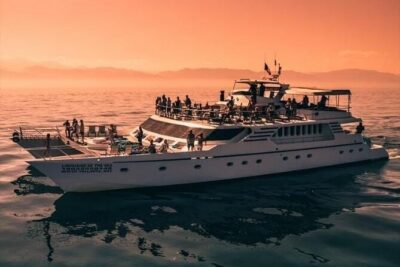
Sunsets and Whales Mega Yachts ALL INCLUSIVE: Puerto Vallarta
Read our review →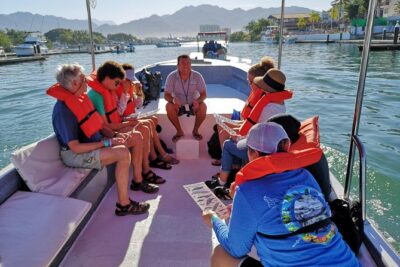
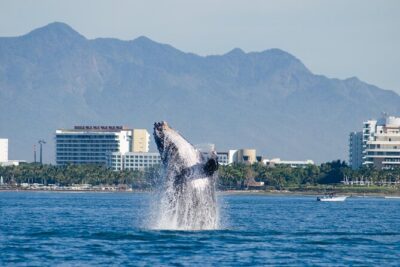
Whale Watching Cruise In Puerto Vallarta & Nuevo Vallarta
Read our review →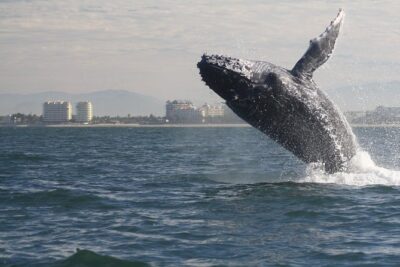
Small-Group Half-Day Whale-Watching Tour in Puerto Vallarta
Read our review →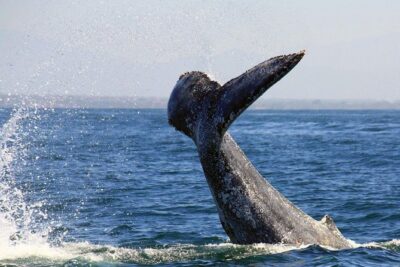
Whale & Dolphin Watching Cruise in Puerto Vallarta All Inclusive
Read our review →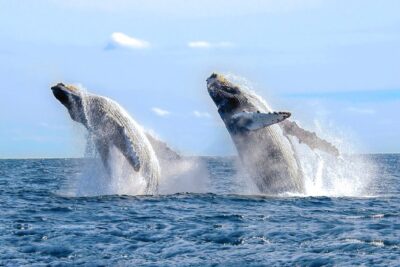
Whale Watching Guaranteed Experience in Puerto Vallarta
Read our review →Browse the lists this tour appears in