
Review · CHOCOLATE MAKING IN PUERTO VALLARTA
Chocolate Tour in Vallarta
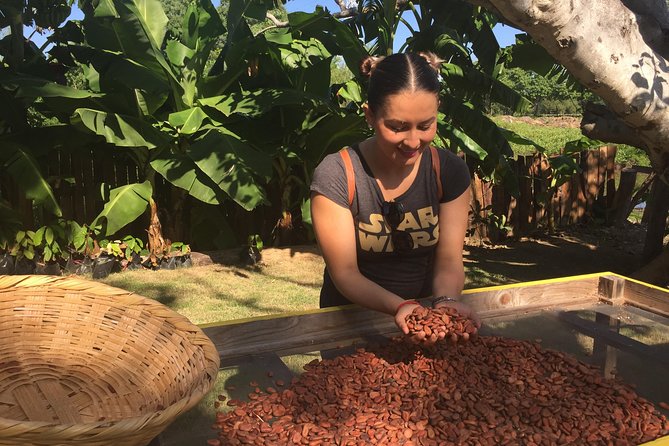
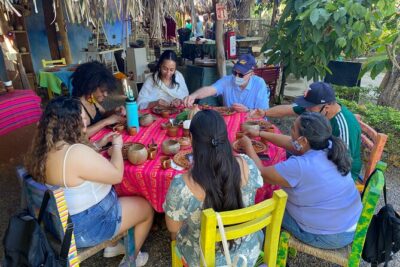
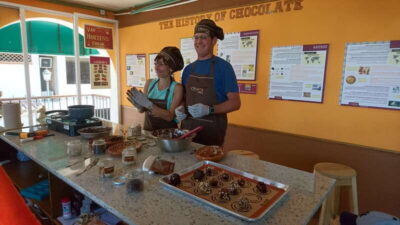
The best part of Planeta Cacao is that you do not simply watch chocolate being made. You open a cacao pod, handle the raw seeds, roast them, remove the husks, grind them by hand, and mix in sugar and cinnamon before shaping your own chocolate to take home. It is a small, personal experience rather than a polished factory tour.
I like the hands-on process, which gives real meaning to the chocolate in your souvenir bag. I also like the link to Mesoamerican foodways, including a cacao and corn drink based on older traditions and the story of cacao cultivation in the Bay of Banderas.
The main drawback is getting there. Planeta Cacao is in rural El Tondoroque, outside Puerto Vallarta, and transportation is not included. An Uber can work, but the round-trip cost may add a noticeable amount to a $39 activity.
In This Review
- Key points to know before booking
- A small cacao garden with a big lesson
- Seeing the cacao pod before it becomes chocolate
- From Mesoamerican drink to worldwide chocolate
- Roasting and shelling the cacao beans
- Grinding cacao with a hand mill
- Tasting cacao drinks, chocolate, and cookies
- Guides who make the private format work
- The real cost: $39 plus transportation
- Who will enjoy this chocolate workshop most
- Practical details before you go
- Should you book Planeta Cacao?
- FAQ
- Where is Planeta Cacao located?
- How far is Planeta Cacao from Puerto Vallarta?
- How much does the Chocolate Tour in Vallarta cost?
- How long does the experience last?
- Is the tour private?
- Is the experience offered in English?
- What food and drinks are included?
- Do I get to make my own chocolate?
- Can I cancel for a full refund?
Key points to know before booking
- Open a cacao pod from the tree: You may see the flower, pod, seeds, and tree at different stages of growth.
- Make chocolate by hand: The workshop includes roasting, shelling, grinding, sweetening, and shaping your own batch.
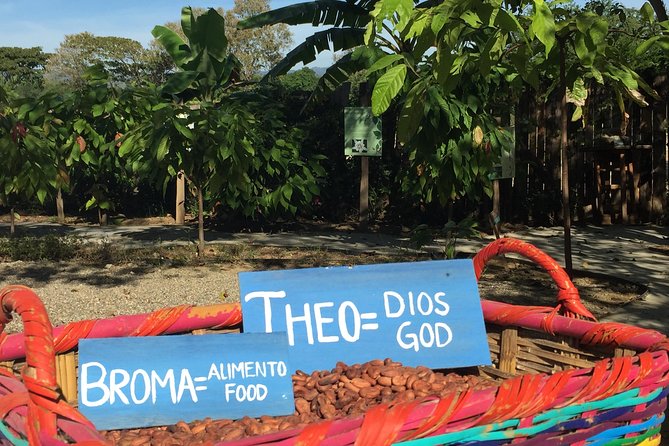
- Learn local cacao history: The presentation covers Mesoamerican uses and cacao cultivation in Nayarit for more than 1,000 years.
- Expect a small cacao garden: This is not a huge plantation. It is a compact, open-air educational site with a short path through cacao trees.
- Taste more than chocolate: Included refreshments include a cacao drink, chocolate samples, and Mexican cacao cookies.
- Plan your ride carefully: Private transportation is not included, and the site is about 15 minutes from Puerto Vallarta by car.
A small cacao garden with a big lesson
Planeta Cacao sits in San Vicente, in the El Tondoroque area of Bahía de Banderas, Nayarit. It is about 15 minutes from Puerto Vallarta and roughly five minutes from Nuevo Vallarta or Bucerías, depending on traffic and your starting point.
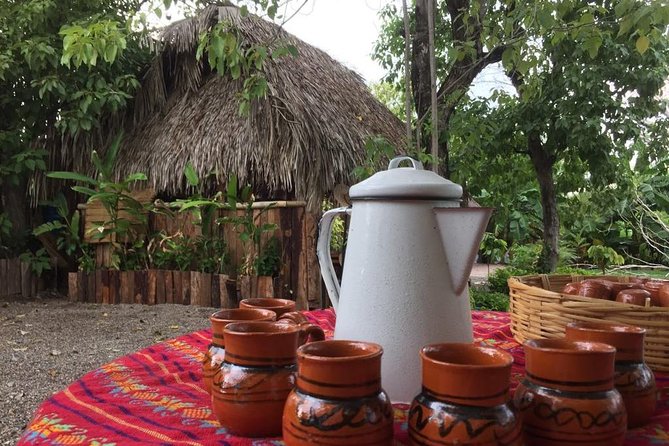
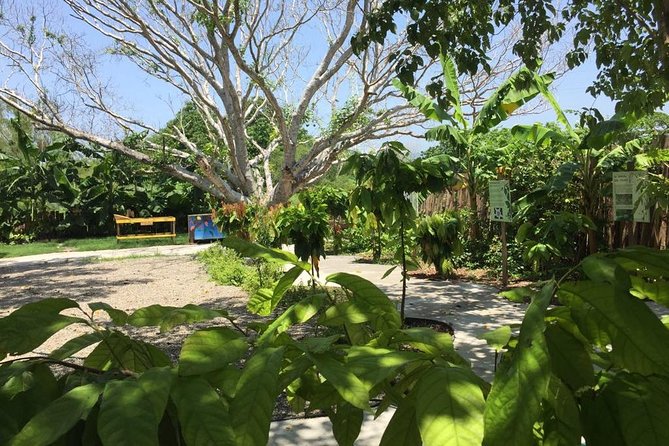
The setting matters. You are not entering a large commercial factory with glass walls and a fixed production line. You are visiting a compact cacao garden designed as an outdoor teaching space. There is a short path among cacao trees, an exhibition of older utensils, a traditional mud kitchen, tasting areas, and a small shop selling homemade products.
I would set your expectations correctly before you go. If you want rows and rows of plantation crops, this is not that. You will see cacao trees at different stages of growth, and the garden gives you a close look at the plant, flower, fruit, and seed. The small scale is also what makes the workshop feel personal.
The experience is private, so only you and your group participate. That is useful for families, couples, and anyone who wants time to ask questions without keeping up with a large group. The private format also lets the guide adjust the talk to your interests, from food and nutrition to local culture and chocolate-making technique.
More Chocolate Making in Puerto Vallarta
- Finca 18 Puerto Vallarta Tequila Tour + Chocolate Pairing
★ 5.0 · 393 reviews - Bean to Bar Chocolate Workshop in Puerto Vallarta
★ 5.0 · 381 reviews - Chocolate and truffles workshop
★ 5.0 · 157 reviews
Seeing the cacao pod before it becomes chocolate
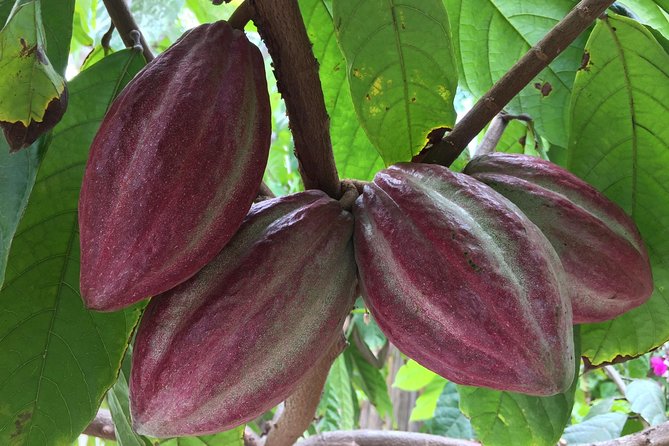
The tour begins with the cacao plant itself. You learn how the tree produces its flowers and pods, and you may have the chance to cut a pod from the tree when fresh fruit is available.
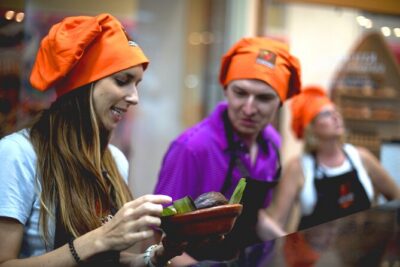
Opening the pod is one of the most memorable moments because the raw cacao looks nothing like the finished candy sold in a shop. Inside are pale seeds covered in sweet, slippery pulp. You can sample the raw material and begin to understand that chocolate starts as a fruit, not as a brown bar.
The guide also explains the stages that follow harvesting: fermentation, drying, roasting, grinding, and mixing. These steps are easy to overlook when you buy chocolate at home, but each one changes the flavor and texture.
The garden includes trees at various stages of growth, so you may see more than just ripe pods. The presentation can include the flower, the pod, the seeds, and details about pollination. This makes the visit useful for children and teenagers, since the subject is connected to biology, food, trade, and culture rather than only dessert.
From Mesoamerican drink to worldwide chocolate
The history portion gives the activity its wider meaning. You learn about cacao in Mesoamerican societies, its traditional uses, and the way chocolate traveled across the world and changed over time.
A key local point is that cacao has been cultivated in Nayarit for more than a thousand years. That places the Bay of Banderas inside a much older food tradition than the resort areas nearby might suggest. The garden connects the plant in front of you with regional history and older cooking practices.
The included starter is a cacao and corn drink inspired by Mesoamerican traditions. It is a useful contrast to the sweet chocolate drinks many people know. You also receive Mexican cacao cookies and chocolate samples, giving you several ways to taste cacao rather than one standard dessert.
The talk also covers nutritional benefits and other cultural uses of cacao. I would treat those points as part of the educational presentation, not as medical advice. The value here is learning how one seed has been used as food, drink, ingredient, and cultural object across centuries.
Roasting and shelling the cacao beans
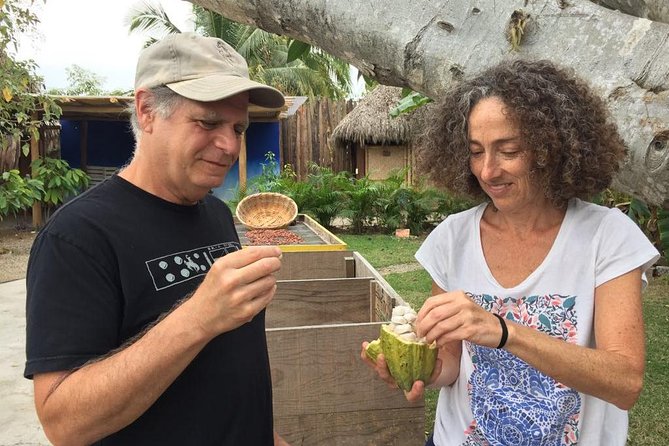
After the garden walk and history lesson, the workshop turns practical. To keep the timing manageable, pre-fermented seeds may already be prepared for roasting. That means you can take part in the key steps without waiting through the full fermentation period, which would take far longer than a short visit.
The beans are roasted in front of you. You then remove the outer husks by hand. This stage is pleasantly simple but important because it shows the physical work between harvest and chocolate.
The aroma changes as the beans roast, and the process makes the raw seed feel more familiar as a food ingredient. You are not just hearing about bean-to-bar production. You are handling the beans and watching the change happen at your own table.
The exact order and length of the workshop may vary. The advertised experience lasts about one hour and 30 minutes, while the longer creative workshop described in the tour details and several accounts can run close to two hours. Allow extra time rather than scheduling a tight transfer immediately afterward.
A few more Puerto Vallarta trips worth weighing up
- Puerto Vallarta: Bean to Bar Chocolate Workshop
★ 4.9 · 41 reviews - Sayulita Magical Town Tour: Local food, and chocolate.
★ 5.0 · 18 reviews - Tarot Reading with Coffee & Chocolate or Smoothie
★ 5.0 · 17 reviews - Puerto Vallarta: 2-Hour Chocolate Truffles Workshop
★ 4.6 · 11 reviews
Grinding cacao with a hand mill
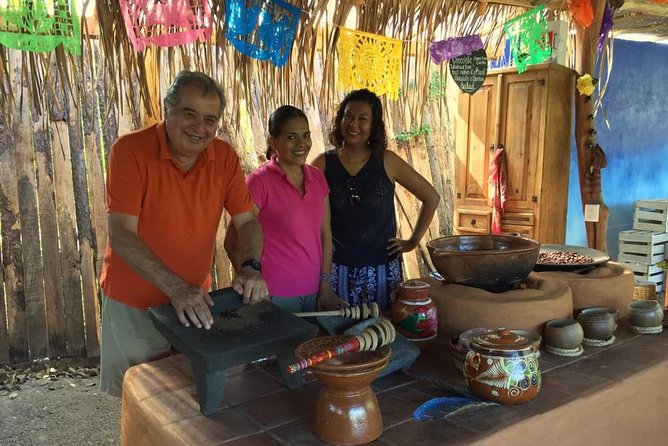
Once the roasted beans are shelled, you grind them by hand. This is where the workshop becomes less like a museum visit and more like a cooking class.
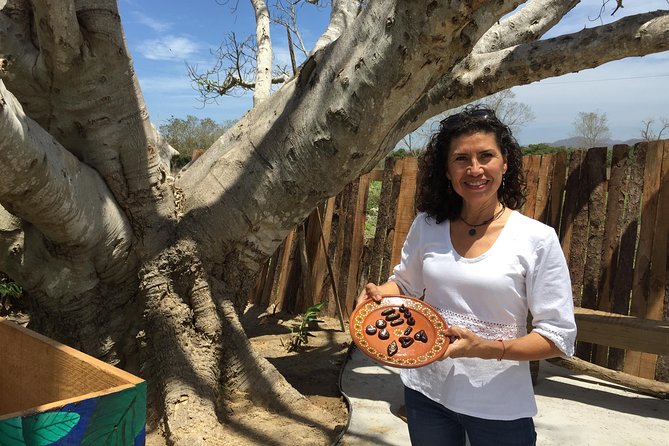
The ground cacao is mixed again, often with sugar and cinnamon. You can adjust the balance to suit your taste, then continue grinding and mixing until the texture develops. It will not be identical to a factory-made bar, and that is part of the point. You are experiencing a traditional, direct method rather than a highly processed product.
Different add-ins may be available for the finished chocolate, including chopped nuts or other seeds. The final mixture can be shaped and decorated, and you can wrap your handmade chocolate to take home.
For families, this is the part that holds attention best. Younger children can help with simple steps, while older children and teenagers get a clearer idea of how food production works. One family with children ranging from six to 83 found the activity suitable across a wide age range, and that makes sense given the mix of short explanations, tasting, and physical work.
Tasting cacao drinks, chocolate, and cookies
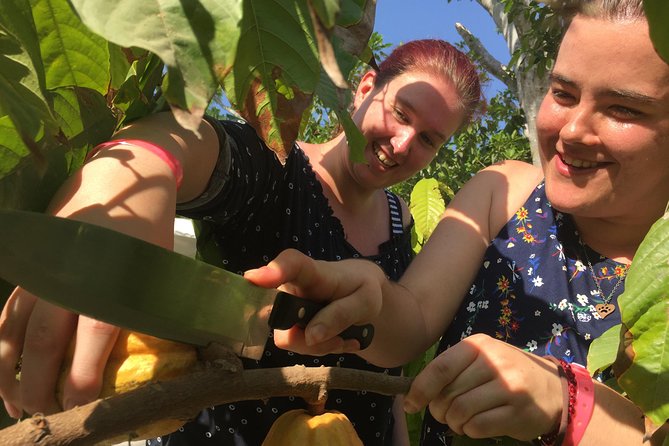
The tasting is spread through the experience rather than saved for a single grand finale. You receive a cacao beverage, chocolate, and Mexican cacao cookies as part of the activity.
The traditional cacao and corn drink gives you a taste of cacao in a less familiar form. The handmade chocolate lets you sample the result of your own work. There is also a selection of locally made products in the shop, so you can compare your batch with finished chocolates made by the garden.
The tasting is a strong reason to choose this tour over a basic chocolate talk. You leave with a sensory understanding of cacao: the raw fruit, roasted bean, ground paste, sweetened mixture, and finished candy all appear during one visit.
If you enjoy chocolate but prefer less sweetness, pay attention to the sugar and cinnamon choices during the workshop. The ability to control the mixture gives you more say in the final flavor than you would have at a standard tasting.
Guides who make the private format work
Several guides are named in the comments about this experience, including Adrián, Rosa, Aldo, Lia, and Millie. The guide assigned to your visit may differ, but the activity is offered in English and is built around explanation and questions.
Adrián is described as especially good at answering detailed questions, including questions from a curious parent visiting with a 12-year-old. Aldo is noted for explaining the tree, flower, pod, seed, and pollination process before leading the roasting and grinding. Rosa and Lia are also described as warm with families and children, while Millie led a private visit that lasted more than two hours.
Those details point to an important strength: the quality of the visit depends heavily on the person leading it. The private format gives the guide room to explain rather than rush through a script. If you are interested in agricultural practices, traditional drinks, or the cultural role of cacao, ask questions as you go.
This is also a good place to remember that a private tour does not automatically mean a luxury experience. The site is modest and community-based. You are paying for access, instruction, tastings, and personal attention, not for a large attraction with elaborate equipment.
The real cost: $39 plus transportation
The listed price is $39 per person. For a private, hands-on activity that includes food samples and your own handmade chocolate, that is a fair price, especially if you are traveling as a family or small group and value personal instruction.
The transportation cost needs closer attention. Private transportation is not included. From Puerto Vallarta, the ride can take about 30 minutes in some accounts, and one recorded visit paid about $8 each way by Uber from the Vidanta area. Another account reported roughly $20 each way from Puerto Vallarta.
Those figures can vary by pickup point, traffic, demand, and time of day. The important lesson is to check the fare before leaving and budget for the return ride. A driver may be easy to find going to the site, but you should still think ahead about how you will get back.
The meeting point is Planeta Cacao, San Vicente 120, 63735 Tondoroque, Nayarit. The activity ends there as well. It is near public transportation, and service animals are allowed, but the information provided does not include a hotel pickup service.
One past account also said that contacting the provider directly resulted in a lower price than the online booking price. That may not still apply, so verify the current rate before relying on it. At $39, the tour remains reasonably priced, but transportation can change the total value.
Who will enjoy this chocolate workshop most
I would recommend Planeta Cacao to you if you want an activity that mixes food, culture, and participation. It is a good break from beach time and resort entertainment, especially if you have already visited a chocolate attraction in central Puerto Vallarta and want something more connected to the cacao plant.
Families are a particularly good match. Children can see the pod, touch the seeds, grind cacao, and make something to carry home. Couples can treat it as a relaxed food outing, while solo visitors can use the private format to ask plenty of questions.
The tour also suits people who care about local food traditions. You will not only taste a sweet product. You will learn about cacao cultivation in Nayarit, older Mesoamerican drinks, household tools, and the work involved in turning seed into chocolate.
I would be less likely to recommend it if you want a large plantation, a long farm walk, or a polished commercial production tour. The garden is small, the path is short, and some of the workshop process uses pre-fermented seeds to fit the available time.
Practical details before you go
Your confirmation arrives at the time of booking, and the ticket is mobile, so you can show it from your phone. The tour is offered in English.
Wear something suitable for an outdoor garden and hands-on food preparation. The supplied information does not give a formal dress code, but the open-air setting and manual work make practical clothing sensible.
Plan for about 90 minutes, with the possibility of closer to two hours if you select or receive the longer creative workshop. The experience ends at the same meeting point, so leave enough time for your return ride.
Free cancellation is available up to 24 hours before the start time for a full refund. Changes or cancellations made less than 24 hours before the start time are not accepted, and the local time at the activity site controls the deadline.
Should you book Planeta Cacao?
Book it if you want to understand chocolate by making it yourself. The strongest parts are the cacao garden, the local and Mesoamerican context, the raw pod tasting, and the step-by-step work that ends with chocolate in your hands.
At $39, it offers good value for families, couples, and small groups who enjoy food activities. Just add transportation to your budget and remember that this is a modest rural garden, not a massive plantation.
If that sounds right, Planeta Cacao is a smart choice near Puerto Vallarta. You will leave with a handmade treat, a better sense of where cacao comes from, and a story that makes the next chocolate bar you eat a little more interesting.
FAQ
Where is Planeta Cacao located?
Planeta Cacao is at San Vicente 120, 63735 Tondoroque, Nayarit, Mexico, in the rural El Tondoroque area of Bahía de Banderas.
How far is Planeta Cacao from Puerto Vallarta?
The garden is about 15 minutes from Puerto Vallarta. It is about five minutes from Nuevo Vallarta or Bucerías.
How much does the Chocolate Tour in Vallarta cost?
The listed price is $39 per person. Private transportation is not included.
How long does the experience last?
The advertised duration is about one hour and 30 minutes. The longer creative workshop can take close to two hours.
Is the tour private?
Yes. Only you and your group participate in the private tour or activity.
Is the experience offered in English?
Yes. The experience is offered in English.
What food and drinks are included?
Included items are a cacao beverage, chocolate, and Mexican cacao cookies. The sample menu lists a cacao and corn drink inspired by Mesoamerican traditions.
Do I get to make my own chocolate?
Yes. The workshop can include roasting cacao, removing the husks, grinding the beans, adding sugar and cinnamon, and shaping or decorating your chocolate to take home.
Can I cancel for a full refund?
Yes, if you cancel at least 24 hours before the experience start time. Cancellations or changes made less than 24 hours before the start time are not accepted for a refund.
Just added around Puerto Vallarta
- Marietas Islands with Guaranteed Entry to Playa Escondida★ 3.5 · 3 reviews
- Puerto Vallarta Airport (PVR) to Sayulita hotels – Private Roundtrip Transfer★ 5.0 · 3 reviews
- Puerto Vallarta Airport (PVR) to Punta de Mita hotels – Private Arrival Transfer★ 4.5 · 3 reviews
- Puerto Vallarta: Great Swedish Massage Experience★ 5.0 · 3 reviews
- Horseback Riding Experience in Puerto Vallarta★ 5.0 · 3 reviews
- PRIVATE transportation from PVR Airport to South Coast★ 5.0 · 3 reviews
- From Puerto Vallarta & Nuevo Vallarta: Canopy Zipline Tour★ 5.0 · 3 reviews
- Mismaloya: Stand-Up Paddleboard & Snorkeling to Los Arcos★ 5.0 · 3 reviews
Chocolate Making in Puerto Vallarta, compared.
Finca 18 Puerto Vallarta Tequila Tour + Chocolate Pairing
Read our review →
Bean to Bar Chocolate Workshop in Puerto Vallarta
Read our review →
Sayulita Magical Town Tour: Local food, and chocolate.
Read our review →
Private Make Your Own Chocolate Experience in Puerto Vallarta
Read our review →Browse the lists this tour appears in